Eat Drink Be Merry for Tomorrow: A Designer’s Review
As an embroidery designer who has spent countless hours digitizing and testing files for real-world application, I approach every new machine embroidery design with a critical eye. It is not just about whether the lines look clean on a screen; it is about how the thread sits on fabric, how the tension holds up after washing, and whether the final finished product resonates with the end customer. Recently, I evaluated the Eat Drink Be Merry for Tomorrow Funny design, and it offers a fascinating case study in balancing humor with technical execution.
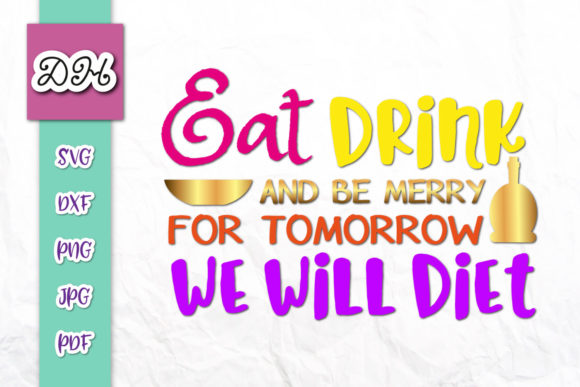
The first impression of this graphic is its playful, relaxed mood. The phrase "Eat Drink Be Merry for Tomorrow We Will Diet" captures a specific cultural moment—the joyful indulgence of holiday gatherings followed by the inevitable resolve to reset. For Etsy sellers and craft business owners, this theme is gold during the Thanksgiving and holiday seasons. However, from a technical standpoint, the challenge lies in translating a design originally marketed as a sublimation print or cut file into a stitched reality. The original description notes included formats like SVG, PNG, DXF, and JPG, which are standard for cutting machines but require careful consideration when adapting for needle and thread.
Visual Appeal and Stitching Clarity
When evaluating Eat Drink Be Merry for Tomorrow Funny for embroidery, the primary concern is legibility. Humor relies on timing and readability. If the lettering is too dense or the stitch density is too high, the text can become a blob of thread, losing the punchline. In my assessment, this design works best when treated with a mix of satin stitch for bold outlines and fill stitch for larger decorative elements, while keeping smaller text in a clean running stitch or simple font to maintain clarity.
The visual personality of the design is casual and inviting. It does not demand perfection; rather, it thrives on a handmade aesthetic. This makes it ideal for custom apparel where a slightly rustic look adds charm. For small shop product lines, this means you can market it as a cozy, relatable item rather than a high-end luxury good. The contrast between the whimsical message and the structured medium of embroidery creates a delightful tension that buyers often find appealing in personalized gift items.
Real-World Application Scenarios
To truly understand the value of this embroidery file, I imagined several practical scenarios. The most natural fit is a tote bag design. A canvas tote with this phrase stitched in earthy tones—mustard yellow, deep olive, or burnt orange—becomes an instant conversation starter at grocery stores or farmers' markets. The durability of canvas supports the weight of the stitches, ensuring the design remains flat and readable.
Another strong candidate is sweatshirt embroidery. Here, the design serves as a centerpiece on the chest or back. The softness of fleece or cotton blends complements the humorous, laid-back vibe of the text. However, one must be cautious with thread colors. On a dark navy sweatshirt, using light cream or white thread ensures the joke lands visually. On a heather grey shirt, a contrasting burgundy or forest green can add depth without overwhelming the garment.
For those exploring holiday embroidery projects, this design fits perfectly on kitchen towels or aprons. Imagine a linen apron with the phrase stitched near the hem. It adds a touch of personality to a host’s outfit during a busy Thanksgiving dinner. The key here is scale. The design must be large enough to be read from a distance but small enough not to interfere with the functionality of the apron pockets or ties.
Navigating Technical Challenges
While the concept is strong, the execution requires attention to detail. Since the source files are primarily vector and raster images (SVG, PNG), they are not native embroidery formats like PES or DST. This means the user must either digitize the design themselves or purchase a properly converted version. If you are working from the provided graphics, pay close attention to the hoop size. Complex phrases often require a 5x7 or larger hoop to prevent crowding.
Textured fabrics present another hurdle. On a fluffy towel or a ribbed knit, small details can get lost. I recommend using a cut-away stabilizer for stretchy fabrics like t-shirts to prevent puckering. For woven fabrics like cotton or linen, a tear-away stabilizer may suffice, but always test on scrap fabric first. The goal is to ensure the fabric texture does not compete with the stitch work.
Additionally, consider the applique design potential. If the original graphic includes solid shapes or backgrounds, converting parts of the design to applique can reduce stitch count and bulk. This is particularly useful for baby embroidery items, where heavy stitching can be uncomfortable against sensitive skin. By using fabric patches for larger elements and stitching only the outline and text, you create a softer, more wearable handmade product.
Commercial Viability and Brand Consistency
For digital embroidery file sellers and commercial embroidery professionals, this design offers versatility. It appeals to a broad demographic: young adults who appreciate irony, parents looking for fun holiday outfits, and friends exchanging gag gifts. When listing this as a design asset or finished item, emphasize the emotional connection. Buyers are not just purchasing a stitched phrase; they are buying a moment of levity.
However, professionalism is key. Ensure that your printable mockup images accurately represent the stitch quality. Use high-resolution photos that show the texture of the thread. This builds customer trust and reduces returns due to mismatched expectations. If you are selling the digital file, clearly state the recommended hoop size and fabric types. If selling the finished item, highlight the care instructions to maintain the integrity of the embroidery.
Final Designer Notes
Before committing to a full production run of Eat Drink Be Merry for Tomorrow Funny, take these practical steps:
- Test on scrap fabric: Always stitch a sample to check for puckering or thread breaks.
- Check thread color contrast: Ensure the text stands out against the background fabric.
- Review stitch density: Adjust density if the design feels too stiff or heavy.
- Confirm licensing: Verify if the original SVG/PNG license allows for commercial use of derived embroidery products.
- Inspect small details: Simplify any tiny serifs or intricate curves that may not stitch cleanly.
In conclusion, Eat Drink Be Merry for Tomorrow Funny is a charming addition to any Crafts or Graphics library, provided it is adapted with care. It bridges the gap between digital convenience and tactile craftsmanship. For the thoughtful designer, it offers an opportunity to create products that are not only visually appealing but also emotionally engaging. Whether used for a custom apparel line, a boutique embroidered patch, or a seasonal gift, this design proves that humor and quality can coexist in the world of machine embroidery.